
*All cost estimates on this page are planning estimates, not quotes. Actual costs vary by location, project scope, materials, site conditions, and contractor. See methodology and sources.
Walk-in shower cost depends on four variables: size, tile choice, glass enclosure type, and whether plumbing needs relocating. Budget builds are fully functional and look clean. Mid-range builds add larger tile, better glass, and built-in features. Luxury builds use custom tile patterns, premium stone, steam generators, and designer fixtures.
| Tier | Cost Range* | What You Get |
|---|---|---|
| Budget ($) | $2,500–$5,000 | Standard porcelain tile, prefab base, basic glass door |
| Mid-range ($$) | $5,000–$10,000 | Large-format tile, curbless, semi-frameless glass, niche |
| Luxury ($$$) | $10,000–$20,000+ | Custom tile pattern, frameless glass, bench, steam, rainfall head |
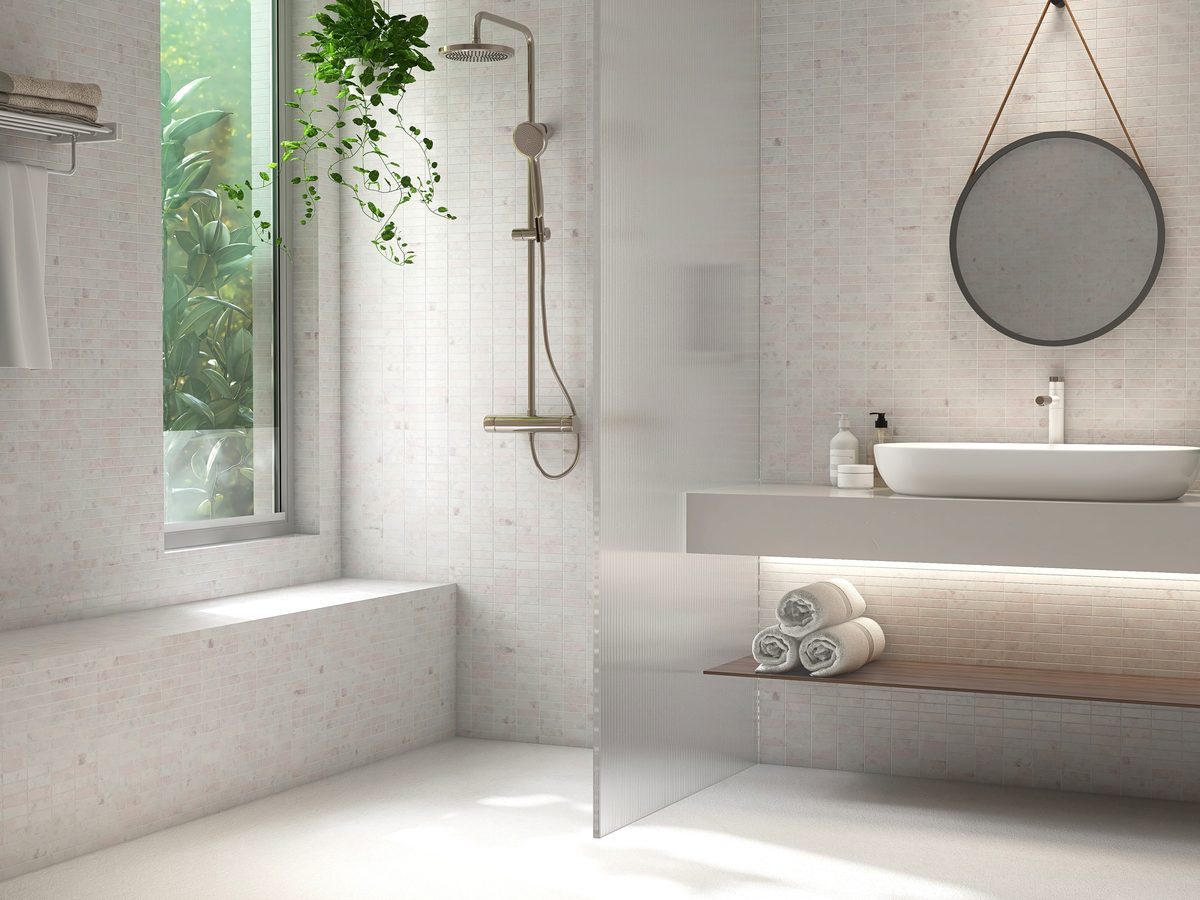
A curbless shower has no step or threshold. The bathroom floor flows directly into the shower. It requires the shower floor to slope toward a linear or center drain, which involves more precise labor. Add $300–$800 to a standard build for the slope work and linear drain. The visual payoff is substantial: curbless designs make any bathroom feel more open and are the standard in high-end remodels. They also meet ADA accessibility requirements, which adds long-term resale appeal.
Tile pattern has an outsized effect on perceived quality. Large-format tiles (24x48 or larger) with minimal grout lines look modern and clean. Herringbone patterns with subway tile add texture and movement at moderate cost. Book-matched stone slabs (two tiles cut and mirrored) look like solid stone for a fraction of the price. Floor-to-ceiling tile on all walls is the hallmark of a luxury build and adds roughly $1,500–$3,000 vs. tiling to 6 feet.
The highest visual impact per dollar: a feature wall in a contrasting tile behind the shower valve. One accent wall in a larger-format or patterned tile costs $400–$900 extra and dramatically elevates the overall design without tiling every surface.
For walk-in showers specifically, frameless glass is almost always worth it. The enclosure is the dominant visual element. A framed or sliding door with visible metal tracks undercuts even expensive tile work. Frameless glass panels run $1,200–$3,500 installed. Semi-frameless (minimal hardware) cost $800–$1,800 and deliver most of the aesthetic benefit at lower cost. Fixed glass panels with an open entry (no door) are popular in larger showers and eliminate door-cleaning entirely, worth considering if your shower is wide enough (36 inches minimum open entry).
A recessed tile niche is the single highest-ROI built-in feature: $300–$600 installed and it eliminates the need for a hanging organizer. A built-in tile bench runs $600–$1,200 and adds both function and a luxury feel. A rainfall showerhead ($150–$600 for the fixture, $200–$400 to install) is a frequent upgrade that delivers a daily luxury experience at manageable cost. Body sprays ($1,000–$3,000 installed for a multi-jet system) add cost quickly and require a larger water heater capacity. Think carefully before adding them to the spec.
For more shower planning, read our bathroom remodeling guide or see costs in detail at our remodel cost page.
Large-format porcelain, a curbless pan, and semi-frameless glass together often look like a much pricier shower than they cost. That combo is my go-to if you want maximum wow for a moderate budget.