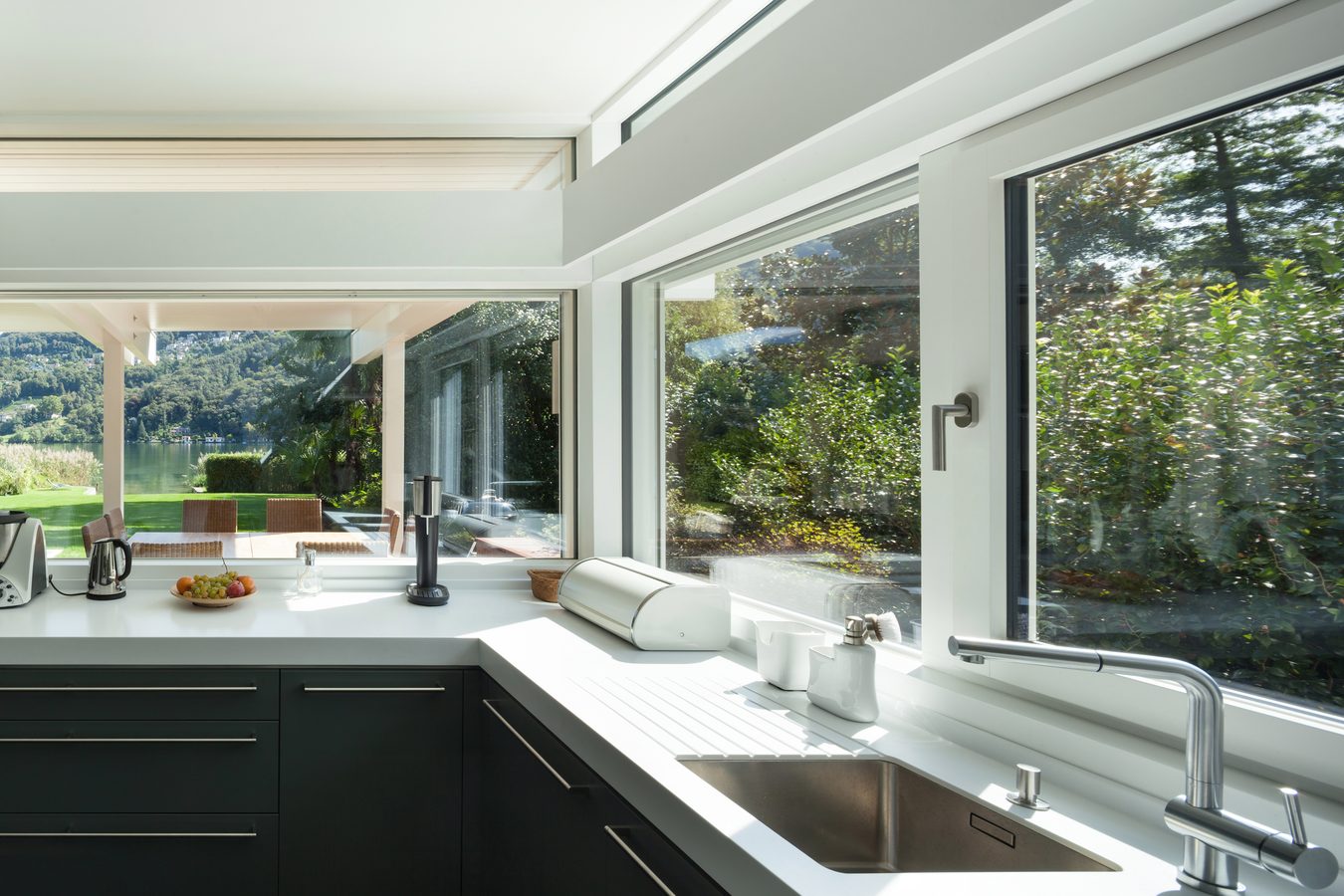

The key metric is U-factor. Lower is better. Standard double-pane windows have a U-factor of 0.25 to 0.40. Triple-pane windows typically range from 0.15 to 0.25. Translated to R-value: double-pane runs R-2 to R-4, while triple-pane runs R-5 to R-10. The additional glass layer and second gas-filled cavity create a meaningful insulation improvement, particularly in extreme cold.
| Window Type | Typical U-Factor | R-Value Range | Avg Installed Cost (per window)* |
|---|---|---|---|
| Double-pane, basic | 0.30–0.40 | R-2 to R-3 | $300–$600 |
| Double-pane, low-E | 0.22–0.30 | R-3 to R-4.5 | $350–$750 |
| Triple-pane, standard | 0.18–0.25 | R-4 to R-6 | $400–$850 |
| Triple-pane, premium | 0.10–0.18 | R-6 to R-10 | $600–$1,200+ |
*All cost estimates on this page are planning estimates, not quotes. Actual costs vary by location, project scope, materials, site conditions, and contractor. See methodology and sources.
The return on triple-pane's cost premium is directly tied to your climate zone and heating costs. In IECC Climate Zone 5 (most of the Midwest, upper Northeast, mountain states) and Zones 6 and 7 (Minnesota, Wisconsin, Maine, Alaska), the incremental energy savings over high-quality double-pane can justify the premium within 10 to 15 years. Heating degree days drive the math. The more you heat, the more the insulation improvement is worth.
HIRI (Home Innovation Research Institute) data shows triple-pane adoption rates in the U.S. remain below 10% overall but exceed 25% in the coldest northern markets, consistent with the climate-zone logic.
In Climate Zones 1 through 3 (the South, most of Texas, Florida, the Southwest), heating loads are low and cooling performance depends more on solar heat gain coefficient (SHGC) than U-factor. Triple-pane's insulation premium is largely wasted here. Your energy costs come from air conditioning, not heating. A low-E double-pane window with a low SHGC is the more appropriate and cost-effective choice.
Triple-pane windows do offer slightly better noise reduction than standard double-pane, but the improvement is modest: typically 2 to 3 STC points. If noise is the primary driver, laminated glass (which uses a PVB interlayer) delivers more meaningful acoustic performance than a third pane of glass alone. Some triple-pane products combine all three panes with laminated glass for maximum acoustic and thermal performance.
Weight is the main practical concern. Triple-pane units are 50% heavier than double-pane, which can affect hardware durability and requires sturdier frames. They're also thicker, which can cause fit issues in older homes with shallow window openings. Some brands have addressed this with thinner glass options, but verify clearance dimensions before ordering. Triple-pane windows also have slightly lower solar heat gain, which is a disadvantage in passive solar home designs.
For Climate Zones 1–4, a quality double-pane window with low-E coating and argon gas fill delivers 80 to 90% of triple-pane's thermal performance at 80 to 85% of the cost. The low-E coating reduces radiant heat transfer through the glass, which is a major component of window heat loss. Many ENERGY STAR® certified double-pane products reach U-factors of 0.25 or below, which overlaps entry-level triple-pane specs. For reference, ENERGY STAR Version 7.0 requires a U-factor of 0.22 or below for a Northern-zone window, or up to 0.26 paired with higher solar heat gain. This is the value sweet spot for most of the country.
Triple-pane earns its premium in Climate Zone 5 and colder. Anywhere milder, a good low-E coating on double-pane gets you better value for the same dollars, so check your climate zone before you pay for the upgrade.