
Every homeowner planning a renovation wants to know if the investment will pay back at resale. The honest answer is: most don't fully recover their cost. But some come close, and understanding which ones shapes smarter spending decisions, especially if you're selling within a few years.
Below are the five home-services projects verified against the 2025 Cost vs. Value Report (Zonda Media), which surveys real estate professionals and contractors nationally. ROI percentages represent the national average cost recovered at resale. Individual markets vary significantly.
Ranked by national average cost recovered at resale, the five projects run in a clear order. A steel entry door replacement leads by a wide margin at a return of 216%, the highest of any project the report tracks, because the outlay is small and the effect on curb appeal is not. Fiber-cement siding follows at 114%, the only other project in the set that returns more than it costs.
The remaining three recoup most but not all of the outlay. A midrange bathroom remodel returns 80%, vinyl window replacement 76%, and an asphalt shingle roof replacement 68%. The pattern worth taking from this is that the cheapest projects tend to return the most proportionally. Curb appeal is priced generously relative to what it costs to buy.
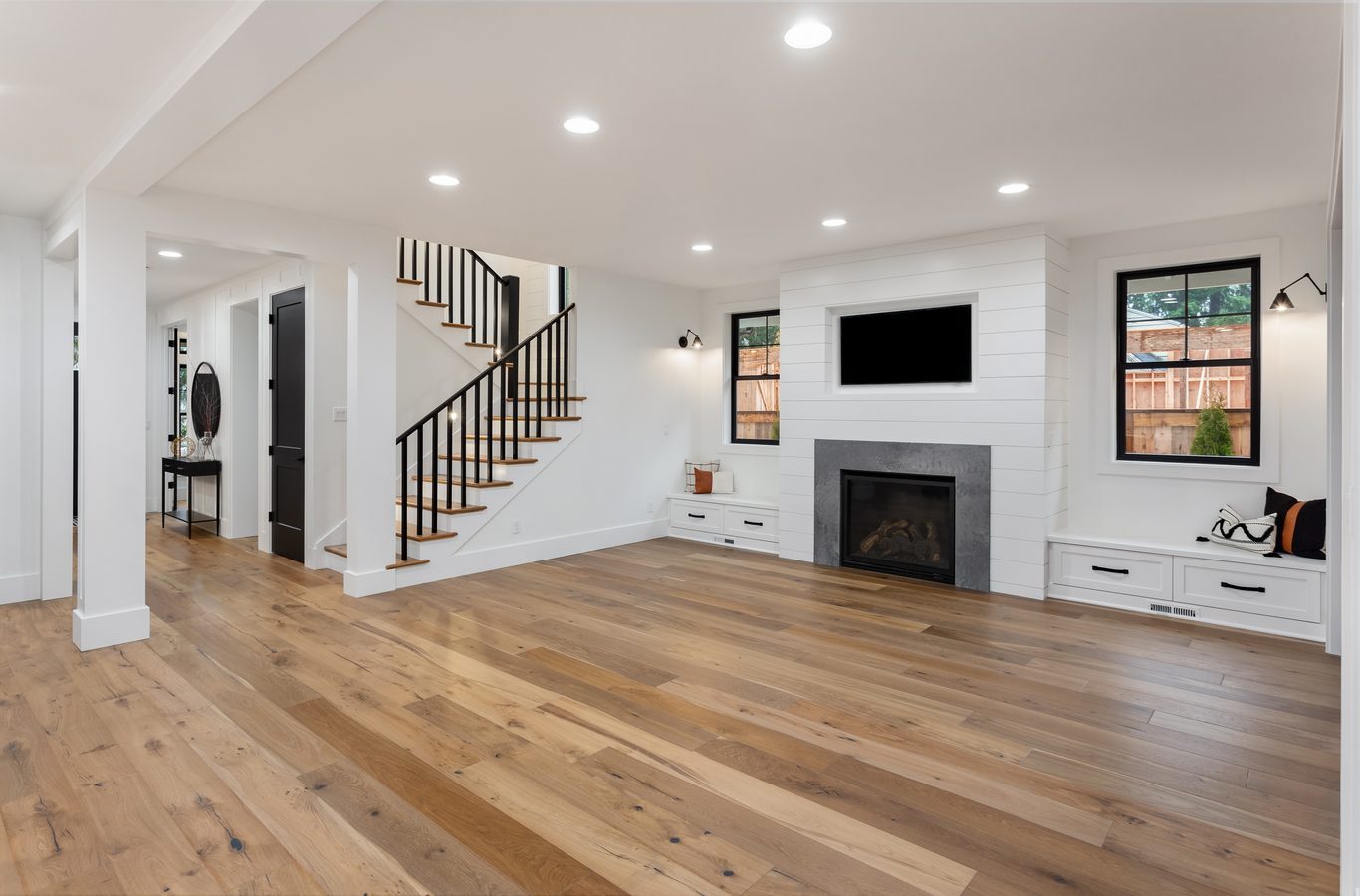
Flooring isn't part of the Zonda Cost vs. Value Report. A National Wood Flooring Association survey of real estate agents found homes with wood floors tend to sell faster and for as much as 10% more: a sales/listing finding, not a cost-recouped percentage.
©2025 Zonda Media, a Delaware corporation. Complete data from the Remodeling 2025 Cost vs. Value Report can be downloaded free at www.costvsvalue.com.
Entry door replacement tops the list mainly because the denominator is small: it is the cheapest project in the set by an order of magnitude, so even a modest gain in resale value is a large share of what the work cost. Curb-appeal projects like doors and siding consistently punch above their weight because they affect buying decisions before a buyer even walks in. Bigger-ticket interior projects like a bathroom remodel return a smaller share of a much larger number, so the percentage looks lower even though the absolute dollar gain is often bigger.
A steel door's 216% ROI looks dramatic, but it is a large share of a small number: a few thousand dollars of gain on a job that costs a couple of thousand. A midrange bathroom remodel at 80% looks like it loses value on paper, but 80% of a $30,000 job is roughly $24,000 recovered, far more absolute dollars back in your pocket than the door. Percentage alone invites the wrong comparison, so run the percentage against your own quote and look at both numbers together.
A lower percentage doesn't mean a project is wrong to do. The question is whether you're renovating for resale or for your own enjoyment. Harvard's Joint Center for Housing Studies (JCHS) research on homeowner satisfaction consistently shows that projects done for daily enjoyment generate significant "live-in value" even when the financial ROI is modest.
The framework: if you're selling within 12-18 months, prioritize the projects that return the most at resale. If you're staying 5+ years, projects you'll actually use and enjoy can be justified even with a lower percentage return.
Substantially. The Cost vs. Value Report tracks ROI by metro area, and the variation is wide. A steel entry door's 216% national average, for example, runs meaningfully lower in some individual metros. In markets with high buyer competition and low inventory, sellers tend to recover more from renovations because buyers have fewer negotiating options. Real estate agents with strong local comps are the best source of market-specific ROI guidance.
See our guides on specific project ROI: siding replacement, roof replacement, and flooring installation.
If you are selling soon, curb appeal wins. Exterior work at the front of the house consistently returns more of its cost than work buyers cannot see. If you are staying, do not let a resale figure talk you out of a project you will actually use every day.